The cheapest thing you can do for a driveway in a place that freezes forty times a winter
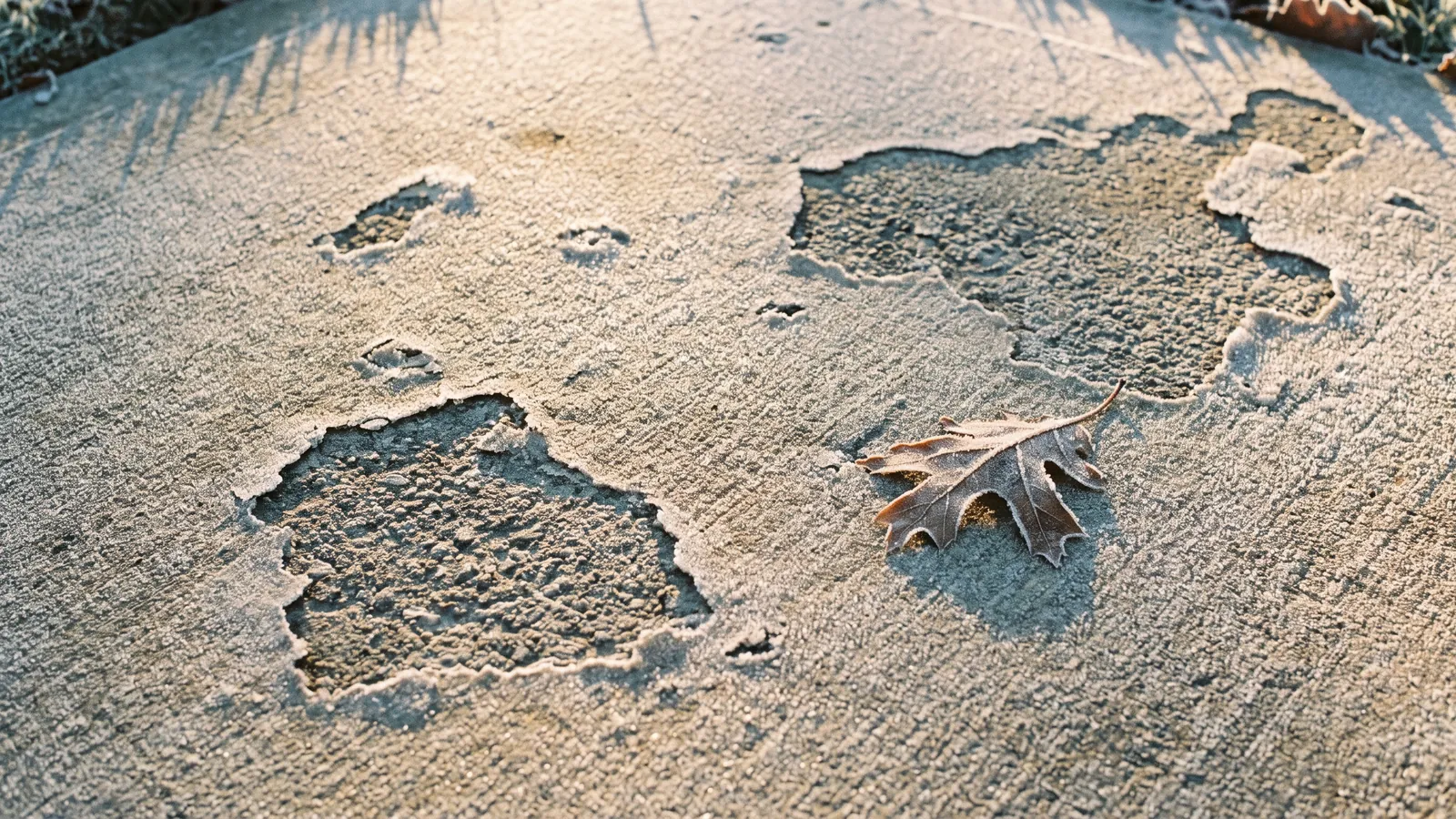
Water gets into concrete, freezes, expands and flakes the surface off; it happens 40 to 60 times a year here. A penetrating sealer keeps the water out of the pores for two or three years at a time. It is not an upsell. It is the reason one driveway looks new at fifteen and the one next door is flaking at six.
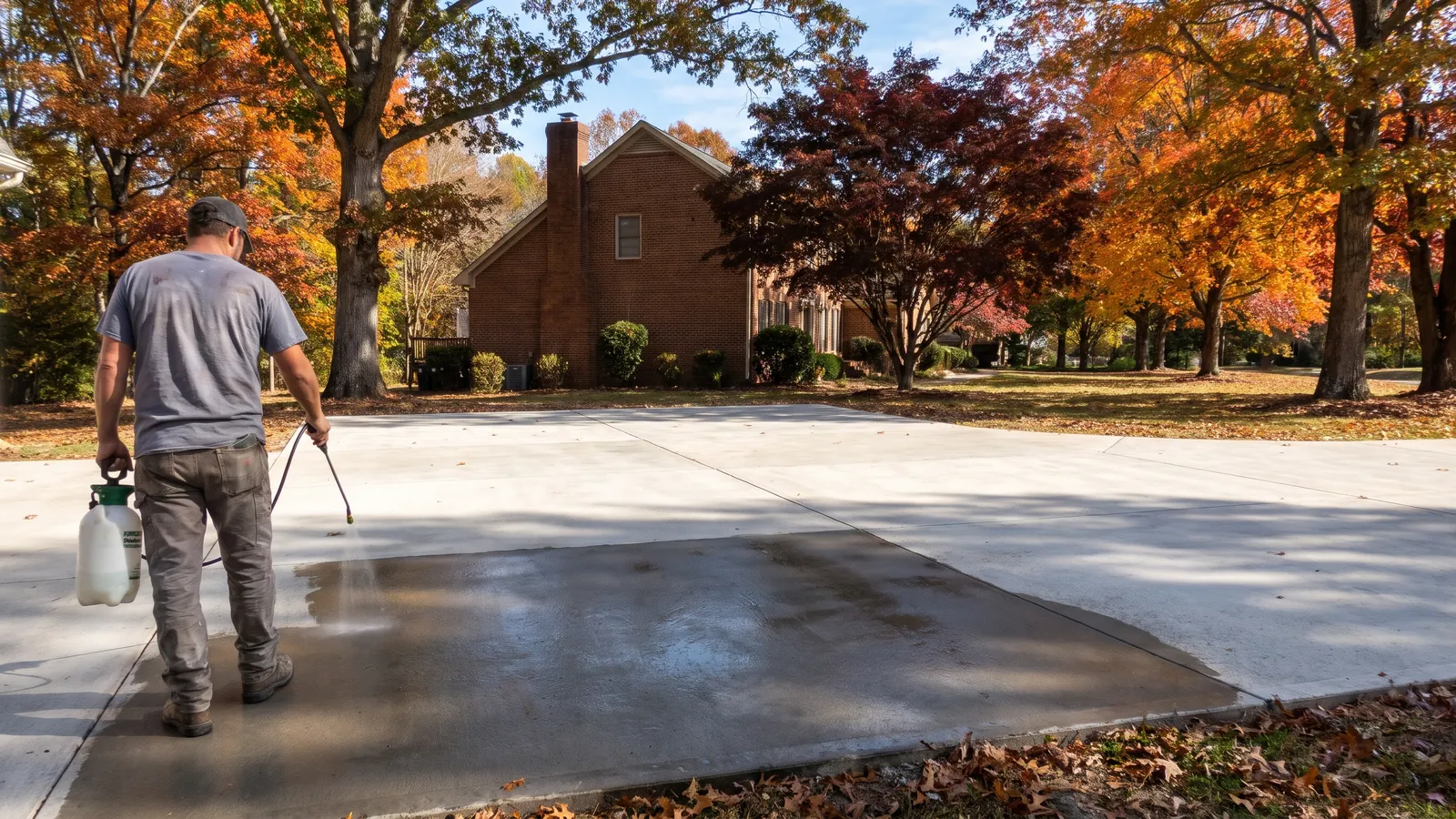
Concrete is porous. Rain, snowmelt and the water from washing the car soak into the top layer, and in the Upstate's winter that water freezes and thaws dozens of times, expanding each time and prying the surface apart a little more. The result is the scaling and flaking we repair every spring, along with widened cracks and joints that have opened up. Sealing is how you stop it. A penetrating sealer, a silane or siloxane, soaks into the concrete and lines the pores so water beads off instead of soaking in, without changing the look or making the surface slick. It lasts two to three years in this climate and then needs renewing, which is quick and inexpensive.
Decorative concrete is a different product. Stamped and stained slabs wear a film-forming acrylic sealer that gives the color its depth and the wet-look sheen, and that film weathers under sun and tires. Resealing every two or three years, after a thorough cleaning, is what keeps a stamped patio looking the way it did the week it was poured. We add a grit to the sealer on pool decks and slopes so the finish is not slippery when wet.
A sealing visit usually includes the small maintenance that goes with it: pressure cleaning to get the mildew, red clay stains and tire marks off before the sealer goes down; joint re-caulking where the control or expansion joints have opened, since open joints are where water gets under the slab and washes out the base; and a look at any cracks worth filling while the slab is clean. New concrete is sealed about a month after the pour, once it has cured out. The best season is a dry stretch in spring or fall when the slab is above 50°F and rain is not forecast for a day or two.
What the job includes
Penetrating sealers
Silane and siloxane sealers for driveways, walks and patios that keep water out of the pores without changing the look.
Decorative resealing
Acrylic film sealers on stamped, stained and colored concrete, with grit added on slopes and pool decks.
Cleaned first
Pressure cleaning to remove mildew, clay stains and tire marks so the sealer bonds and the slab looks right.
Joints re-caulked
Open control and expansion joints cleaned and sealed with a flexible sealant on the same visit.
Timed for the weather
Applied on a dry day with the slab warm enough, in spring or fall, and about a month after any new pour.
A simple schedule
A reminder every two to three years, or sooner for a stamped driveway under daily tires.
Sealing and maintenance prices in Greer, SC
| Work | 2026 range | What changes it |
|---|---|---|
| Penetrating sealer, per sq ft | $1.50 – $4 | Slab size and cleaning needed |
| Sealing a two-car driveway, about 800 sq ft | $1,200 – $3,200 | At the range above, including cleaning |
| Resealing stamped or decorative concrete, per sq ft | $1.50 – $4 | Plus any stain touch-up |
| Pressure cleaning only, per sq ft | Priced by area | Mildew and clay staining |
| Joint re-caulking, per linear ft | Priced on inspection | Joint width and condition |
| Crack filling with the seal | Priced on inspection | See repair |
| Maintenance plan, every 2–3 years | Same per-sq-ft rates | Scheduled reminder |
Budgeting ranges for the Upstate in 2026, drawn from current contractor cost guides. Your figure is written after the estimator has measured the site and checked the ground, and it is itemized so you can see where the money goes.
On site
Sealing and maintenance questions, answered
Does sealing really matter in South Carolina?
In Greer it does. The coast rarely freezes and the mountains stay cold, but the Upstate crosses 32°F 40 to 60 times a winter, and every cycle works on water in unsealed concrete. Sealing is the single cheapest thing that extends a slab's life here.
How often should I seal?
Every two to three years for a penetrating sealer on plain concrete; about the same, sometimes sooner, for the film sealer on a stamped driveway that sees tires and sun daily.
Will the sealer make my driveway shiny or slippery?
A penetrating sealer changes nothing you can see or feel. A film sealer on decorative concrete adds sheen and can be slick when wet unless grit is added, which we do on slopes and around pools.
When should a new driveway be sealed?
About a month after the pour, once the concrete has cured out and dried. Sealing a green slab traps moisture.
Can I seal my driveway myself?
You can, with a quality penetrating sealer, a clean dry slab and a sprayer. Most people hire it out because the cleaning is the hard part and the product choice matters.
Does sealing hide cracks or stains?
No. Cracks are filled before sealing and stains come off in the pressure cleaning, or they do not. A sealer protects; it does not repair.