A patio that drains away from the house and still looks right in year fifteen
The most common patio mistake in Greer is not the finish, it is the grade. Water that runs toward the foundation is a crawlspace problem waiting to happen, and 49 inches of rain a year finds every flat spot. We form patios to fall away from the house, pour them on stone, and finish them however you like.
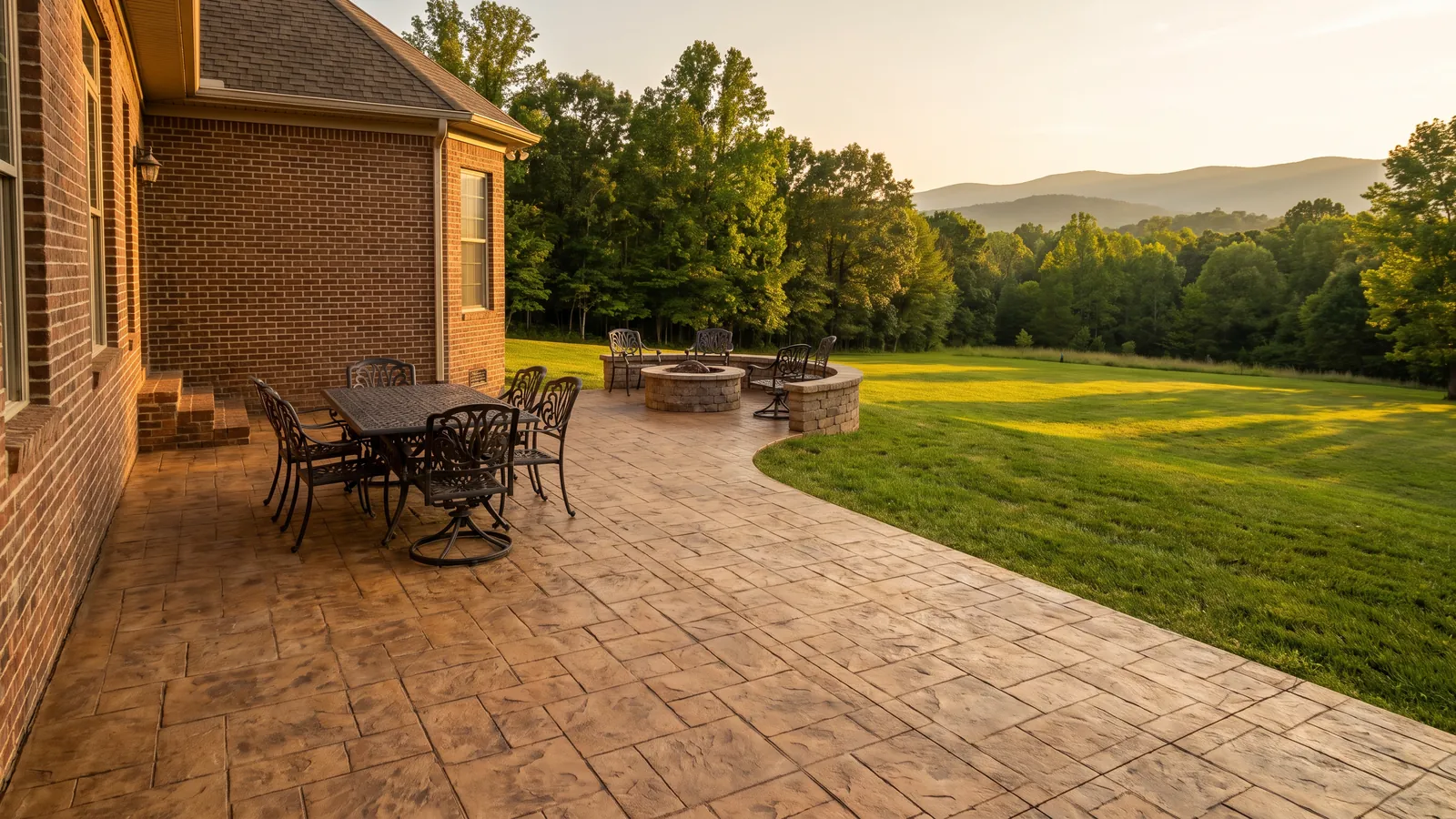
A patio is the slab you will actually spend time on, which changes a few things. It needs to be big enough for the furniture you own and the people you host, not the furniture in a catalog; a dining set with chairs pushed back wants about twelve feet in each direction, a fire pit area more. It needs to slope away from the house, around a quarter inch per foot, so the Upstate's heavy rain runs off the far edge and not against your brick. And it needs the same base as a driveway, because a patio poured on topsoil and clay heaves and cracks just as quickly, only closer to where you will notice it.
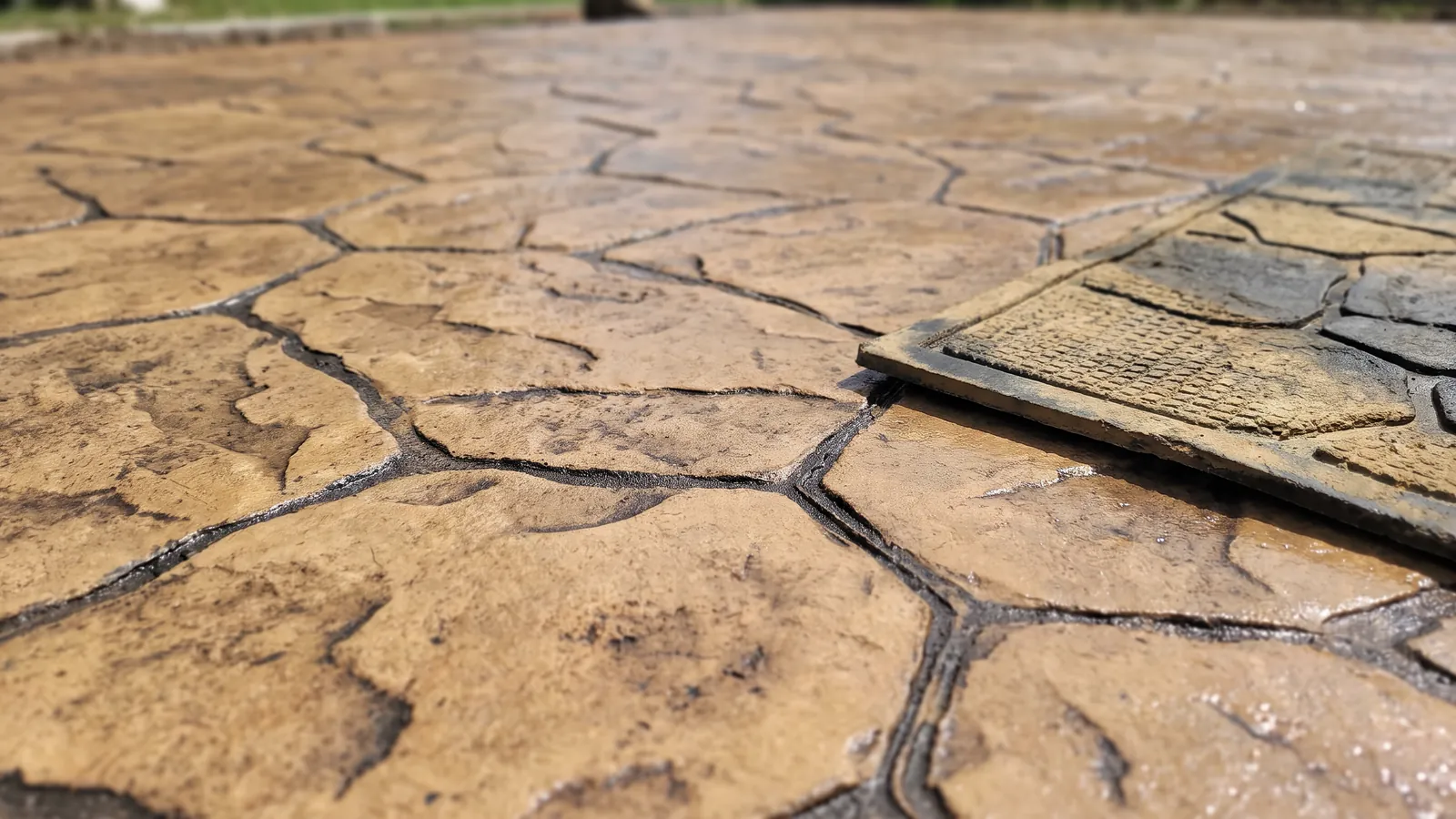
The build is the same discipline as our driveways: excavate past the topsoil, place and compact crushed stone, set forms to the fall, reinforce, pour early on a summer day, finish, cut the joints and cure. A standard patio is four inches thick. The finish choices are where patios get interesting: a plain broom finish for grip and a clean look; a smooth trowel finish under a covered porch; exposed aggregate for texture; or a stamped pattern with integral color and a release stain that reads as slate, flagstone or wood plank. Many patios combine two, a stamped field with a plain broomed border, or a broomed field with a stamped band.
We also extend existing patios, replace heaved or cracked ones, pour pads for hot tubs and outdoor kitchens with the extra thickness and reinforcement those loads need, and set in sleeves or conduit before the pour if you are planning a gas line, a water feature or lighting later. If the patio sits below a deck or a roof drip line, we talk through where that water will go before the forms are set, because a slab can only drain what it is sloped to drain.
What the job includes
Sized for how you live
Laid out on site with you for the table, the grill, the fire pit and the walkway, not from a standard square footage.
Graded away from the house
Formed with a positive fall so rain leaves the slab at the far edge, with a drain or swale where the yard needs one.
Same base as a driveway
Excavation, compacted crushed stone and reinforcement; a patio heaves on bare clay as readily as any slab.
Four finishes, or a mix
Broom, smooth trowel, exposed aggregate or stamped and colored, with borders and bands where they suit the design.
Ready for what comes next
Sleeves for gas and electric, thickened pads for hot tubs and outdoor kitchens, footings for a future cover.
Joints you will not notice
Control joints planned into the pattern or the border layout rather than sawn across the middle of your dining area.
Concrete patios prices in Greer, SC
| Work | 2026 range | What changes it |
|---|---|---|
| Broom-finish patio, per sq ft | $6 – $15 | Size, access and base depth |
| Typical 12 × 16 patio, broom finish | $1,150 – $2,900 | At the per-square-foot range above |
| Stamped and colored patio, per sq ft | $12 – $25 | Pattern, color count and borders |
| Exposed aggregate patio, per sq ft | $8 – $18 | Aggregate choice |
| Hot tub or outdoor kitchen pad | Priced by size and load | Thicker slab, heavier reinforcement |
| Patio extension tied to existing slab | Per sq ft as above | Doweled to the old concrete |
| Sealing, per sq ft | $1.50 – $4 | Recommended on every finish |
Budgeting ranges for the Upstate in 2026, drawn from current contractor cost guides. Your figure is written after the estimator has measured the site and checked the ground, and it is itemized so you can see where the money goes.
On site
Concrete patios questions, answered
How big should a patio be?
For a dining set, allow about twelve feet square so chairs can push back. A seating area around a fire pit wants fifteen to eighteen feet across. We mark it out on the grass with you before the estimate is written.
Stamped or plain?
Stamped costs roughly twice a broom finish and needs resealing every two or three years to hold its color. Plain broom finish is cheaper, grips better when wet and ages gracefully. Many Greer homeowners choose a broomed field with a stamped border.
Will a patio against the house cause water problems?
Only if it is poured flat or sloped toward the wall. Ours fall away from the foundation at about a quarter inch per foot; where a roof valley dumps onto the slab we add a channel drain or extend the downspout.
Can you pour over my old patio?
Occasionally, as a bonded overlay, if the old slab is sound and the added height does not block a door. Usually the old slab is the problem and it comes out.
How long until I can use it?
Walk on it the next day, furniture after about a week, and give a stamped finish its full cure before sealing. The estimate gives dates for your mix and season.
Do I need a permit for a patio in Greer?
A ground-level patio generally does not need a building permit in Greer, Greenville County or Spartanburg County. A covered patio or one with footings for a roof may, and we tell you before pricing.